



Verde Reservoirs Sediment Mitigation Project
The need: Restoring lost capacity and increasing water supply
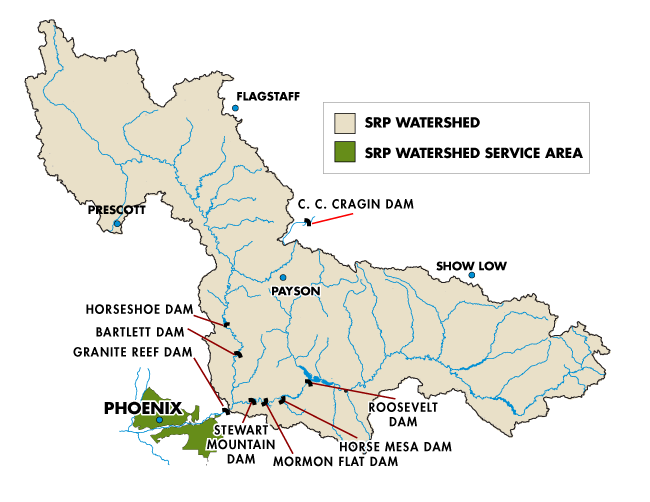
SRP delivers water generated by a 13,000-square-mile watershed — an area of land where rain and melted snow flow into rivers. This water flows into the Salt and Verde rivers where dams operated by SRP form vital reservoirs to store water for when the Valley needs it most. Like water, sediment is naturally transported through the Salt and Verde rivers and ultimately captured in these reservoirs. Over time, this sediment builds up, reducing the overall amount of water that can be stored.
Water storage along the Verde River
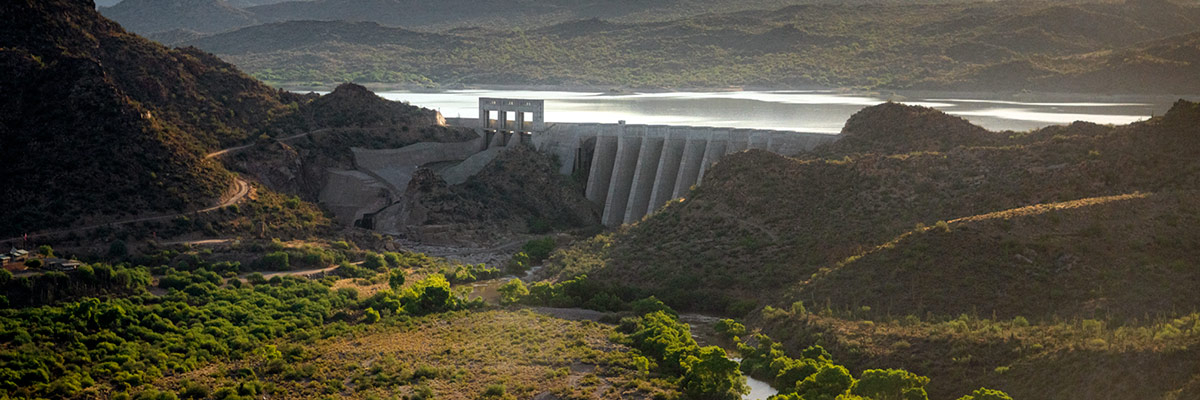
Located northeast of Phoenix, SRP operates, cares for and maintains two dams and their corresponding reservoirs on the Verde River: Horseshoe Dam and Bartlett Dam. During wet winters, reservoirs are more likely to reach capacity, which may require SRP to release excess water that could have otherwise been stored for use during the dryer months and years.
In 2023, SRP had to release water from Bartlett as the reservoir reached capacity due to heavy winter precipitation in the Verde watershed. The water SRP released during that period was equivalent to the water use of over 1 million households for an entire year.
A possible solution: Expanding Bartlett Reservoir with a new dam
SRP is constantly evaluating ways to ensure that we are effectively and sustainably managing the Valley’s water supply while also planning for drought conditions. The Bureau of Reclamation (Reclamation) coordinated and finalized the Verde Reservoirs Sediment Mitigation Study Appraisal Report (Study Appraisal Report) in December 2021 to identify possible solutions to help protect the water supply and restore water storage capacity lost to sedimentation on the Verde River. One of the promising solutions identified in the report involves the construction of a new, larger Bartlett Dam to replace the existing dam, which would expand the reservoir's capacity as well as update the dam infrastructure to better manage sediment buildup.
Section 40902 of the Infrastructure Investment and Jobs Act, P.L. 117-58 granted authorization for the Verde Reservoirs Sediment Mitigation Project (Opens in a new tab) (VRSMP) federal feasibility study to further evaluate solutions. Reclamation is considering proposed actions and a reasonable range of alternatives in the feasibility study. The reasonable range of alternatives include the following: (a) two new Bartlett Dam design alternatives; (b) at least one nonstructural sediment and water management alternative; (c) a no-action alternative; and (d) other alternatives that may be developed through the National Environmental Policy Act process. A New Bartlett Dam and Expanded Reservoir is one proposed solution that will be evaluated through the feasibility study.
New Bartlett Dam and Expanded Reservoir benefits
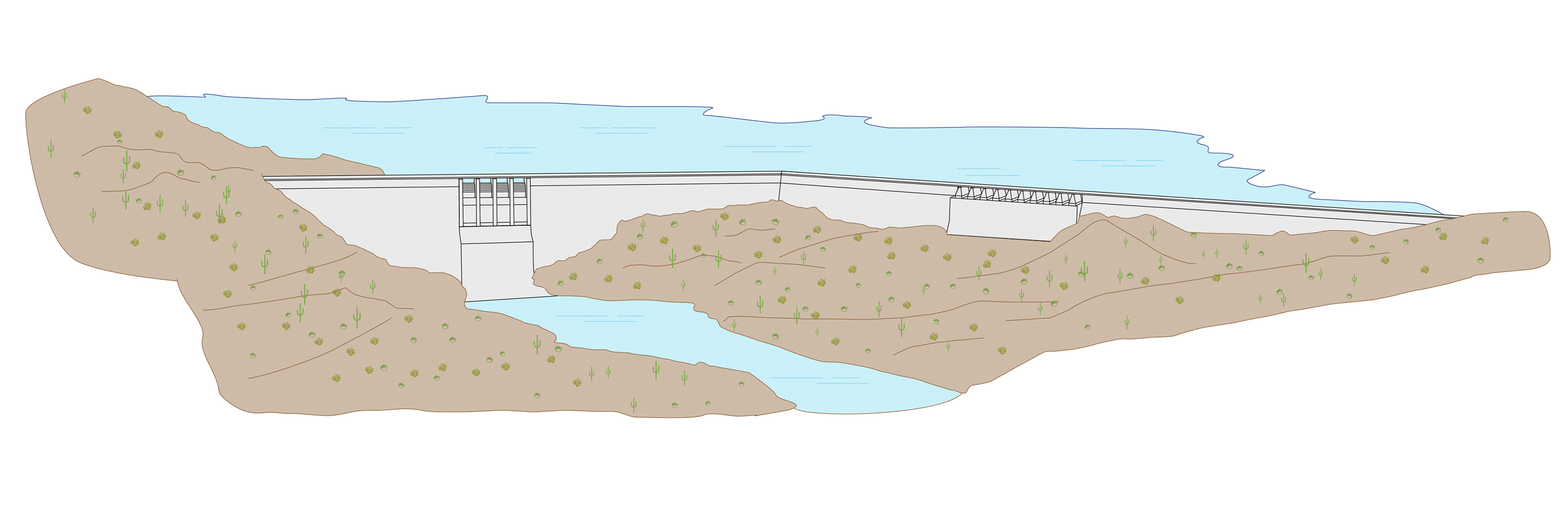
If recommended by Reclamation and approved by Congress, constructing a New Bartlett Dam and expanding the reservoir will allow for the capture of more water during wet winters. This means there will be more water available to use during drought periods, which are expected to last longer on average in the future. Along with the construction of a New Bartlett Dam, the new dam facilities will allow SRP to better manage sedimentation in the reservoirs. The new water supplies made available by the Expanded Bartlett Reservoir will help central Arizona manage shortage conditions on the Colorado River and help reduce the reliance on nonrenewable water supplies such as groundwater.
While details are still being evaluated, SRP believes that constructing a New Bartlett Dam to raise Bartlett Reservoir’s water surface elevation by 100 feet would provide the greatest water supply benefit at the best economic value. With the proposed expanded Bartlett Reservoir, up to approximately 323,000 acre-feet (AF) of additional New Verde Space (NVS) capacity could be created. This amount would be enough to provide water to a million households for one year. SRP completed a similar expansion project at Roosevelt Dam in the 1990s, which successfully increased reservoir capacity.
SRP supports the selection of the construction of a New Bartlett Dam that would raise the reservoir elevation by approximately 100 feet as the proposed alternative to submit to Congress for authorization in the event Reclamation determines such alternative is feasible.
Resilient and diverse water supplies
SRP is committed to identifying ways to strategically manage regional water supplies for the benefit of water users within the reservoir district's boundaries and other participants who obtain water from the reclamation project. In addition to protecting water for SRP customers, a potential New Bartlett Dam and Expanded Reservoir would provide essential new renewable supplies of water to central Arizona that can help water providers better navigate the current shortages of groundwater and Colorado River supplies, both of which are crucial sources of water for the Valley.
Additional benefits
Aside from protecting the Valley’s water supply, this project will have a variety of potential benefits, which include:
- Increasing recreational opportunities that stimulate Arizona’s economy; and
- Improving SRP’s ability to balance flood operations and water storage.
Next steps
SRP and 23 municipal, tribal and agricultural partners are working with Reclamation to complete a feasibility study that will evaluate several alternatives, including the proposal to build a New Bartlett Dam and Expanded Reservoir.
The Notice of Intent to complete an Environmental Impact Statement (EIS) for the VRSMP was published in the Federal Register in mid-July 2025. This is a significant milestone as it is the official start to the National Environmental Policy Act (NEPA) process and development of the EIS. SRP and Reclamation have been working since the authorization of the VRSMP feasibility study to further the evaluation and design of the alternatives proposed within the Study Appraisal Report.
The NEPA process begins with a 30-day public comment period. During this 30-day period, five different public meetings will be held — two virtual and three in-person open house meetings. The NEPA process will be led by Reclamation. Further information on the NEPA process and the dates and locations of the public meetings can be found on
this webpage. (Opens in a new tab)
The EIS will take approximately two years to complete; the final EIS is expected by summer 2027. Upon completion, the EIS will be submitted to the U.S. Congress, along with the feasibility report, for consideration for authorization. Upon review, Congress will then hold a vote to determine whether a project should be approved.
Additional resources:
Bureau of Reclamation VRSMP Feasibility Study (Opens in a new tab)
Bureau of Reclamation VRSMP NEPA Process and Environmental Impact Statement (Opens in a new tab)
Funding the feasibility study
The anticipated cost of this feasibility study is $33 million of which half is being funded by the federal government (Opens in a new tab), and the other half is divided between SRP and the 23 funding partners. If selection of a feasibility study alternative is authorized for implementation and/or construction by Congress, the total project is estimated to cost between $2.6 billion and $3.7 billion depending on the alternative selected. The construction costs will be determined through the completion of the feasibility study. The final construction cost of the selected alternative will be funded by those agencies and/or organizations benefiting from the project. The potential design and construction of the New Bartlett Dam, if approved by Congress, is anticipated to take 10–15 years to complete and will help secure more water in the Valley for generations to come.
FAQ
Want more information? Read the FAQ below to learn more about this project.
During public scoping, interested parties can comment on the range of alternatives to be considered and identify resources or topics that should be considered for analysis in the EIS. Interested parties can provide such comments at the public meetings listed on this webpage or through the project webpage. After the public scoping period, the Bureau of Reclamation will begin accessing the environmental, social and economic impacts of the alternatives in the EIS.
Sedimentation has reduced storage capacity in the Verde River reservoirs by approximately 50,000 acre-feet. A New Bartlett Dam would restore capacity lost to sedimentation and increase the capacity of Bartlett Reservoir. Additional water storage will help support our current population and prepare for the Valley's drought periods, which are expected to last longer in the future.
Yes. In the 1990s, SRP, Reclamation and regional partners successfully modified the Roosevelt Dam along the Salt River. The $430 million project increased the height of the dam by 77 feet, more than doubling Roosevelt Lake's capacity and creating additional water supplies to serve more than 1 million households per year.
SRP is partnering with 23 municipal, tribal and agricultural partners. See the full list below.
- Apache Junction Water District
- Arizona Water Company
- Buckeye Water Conservation and Drainage District
- Carefree Water Company
- Central Arizona Groundwater Replenishment District
- City of Avondale
- City of Buckeye
- City of Chandler
- City of El Mirage
- City of Glendale
- City of Goodyear
- City of Mesa
- City of Peoria
- City of Phoenix
- City of Scottsdale
- City of Surprise
- City of Tempe
- EPCOR
- Fort McDowell Yavapai Nation
- Pinal County Water Augmentation Authority
- Town of Cave Creek
- Town of Gilbert
- Town of Queen Creek
SRP and the other funding partners are working with the Bureau of Reclamation to complete a federal feasibility study to evaluate the proposal to construct a New Bartlett Dam and Expanded Reservoir. The final feasibility report will be completed in late 2027. SRP expects Reclamation to send the report to the U.S. Congress by late 2028. Congress will then vote to determine if the project should be authorized.
The anticipated cost of this feasibility study, including the engineering and design of the facilities and environmental compliance, is $33 million. Half of that cost is being covered by the federal government, with the other half split among SRP and the 23 partners. The total estimated cost of a potential New Bartlett Dam or a dredging operation at Horeshoe Reservoir is between $2.6 billion and $3.7 billion. The construction costs will be determined through the completion of the feasibility study. The final construction cost of the selected alternative will be funded by those agencies and/or organizations benefiting from the project.
While project details are still being evaluated, this project could take 10–15 years for design and construction if authorized by the U.S. Congress. The next step following the feasibility study is getting congressional authorization. More details about the project timeline will be shared as they become available.
SRP is always working to ensure a reliable water supply for the Valley. While there is enough water now, we must plan for the future to continue meeting the needs of central Arizona's current population. This project would help optimize water supplies for the future and help better prepare the Valley for the challenges to come.
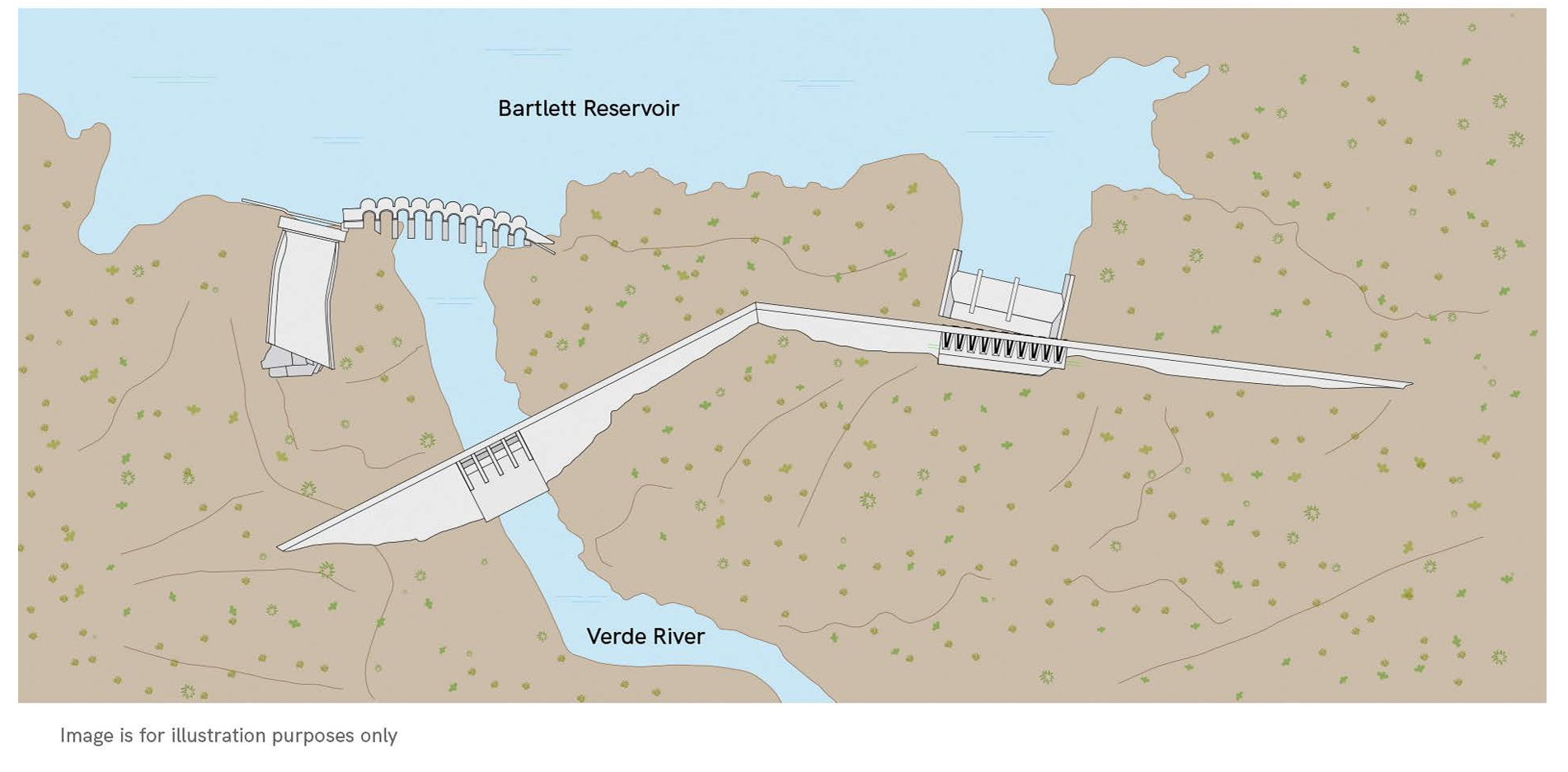
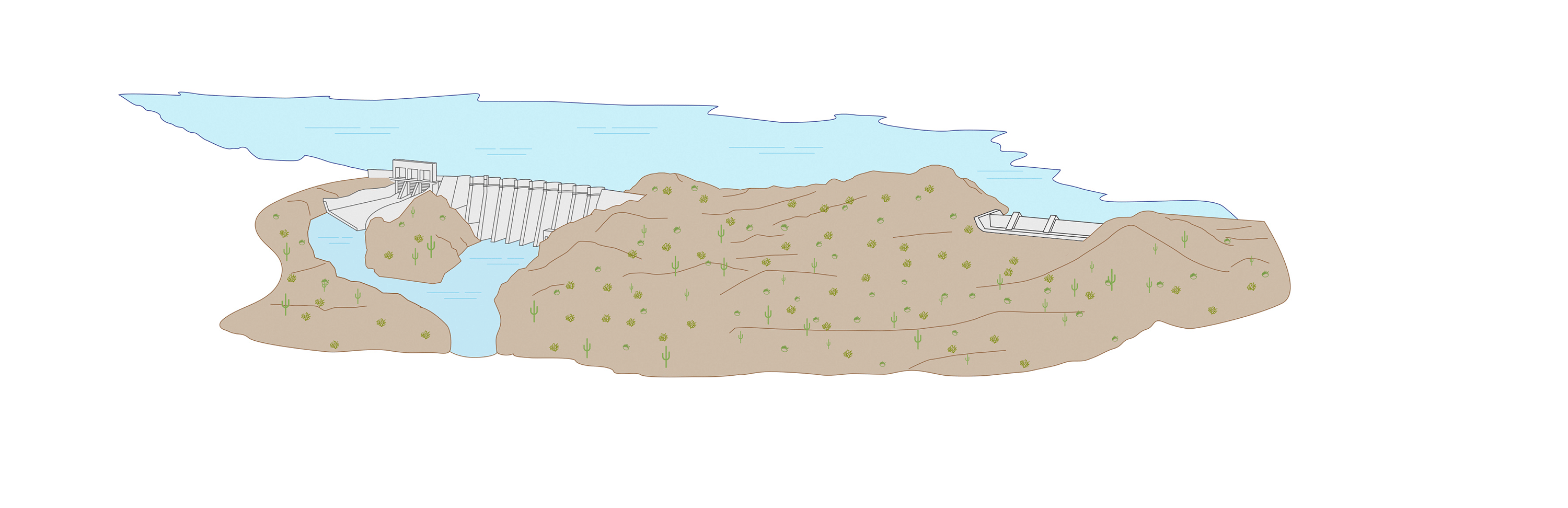
The existing Bartlett Dam will be selectively demolished by removing the existing spillway gates and creating windows in the existing dam arches. The purpose of the selective demolition is to allow for the free flow of water through the existing Bartlett Dam. The graphic below depicts the position of the existing Bartlett Dam in relation to the proposed layout of the New Bartlett Dam. The existing Bartlett Dam will be submerged once construction is completed if the new dam alternative is chosen.